

How we work
Diagnosis before prescription.
The method is borrowed from clinical practice, not from sales. Understand the complaint, inspect the system, collect evidence, identify the cause, define the intervention, and then verify that it did what it was supposed to do.
- in a fixed order
- before any recommendation
- kept apart in every report
- beyond ₹99, each quoted first
The sequence, and why the order matters.
Each step depends on the one before it. Skipping into a recommendation from a symptom is how plants end up buying equipment that was never the problem.
Observe
What the plant is doing, in the operator's own words.
Investigate
Attend the site, inspect the system, and gather the evidence that exists.
Find
Establish what is actually true about the plant, separate from opinion.
Diagnose
Determine why it is happening — the cause, not the symptom.
Recommend
State what should be done, and on what basis.
Solve
Engineer the intervention, with its assumptions and limits written down.
Verify
Where the engagement includes it, confirm the change did what it was expected to do: measured, under stated conditions.
Four questions before any recommendation.
- AttentionQ1
Which few things here are not ordinary?
Most of a plant is normal. The skill is in the exceptions.
- ChangeQ2
What is different from when it last worked well?
Change is usually the first lead.
- EvidenceQ3
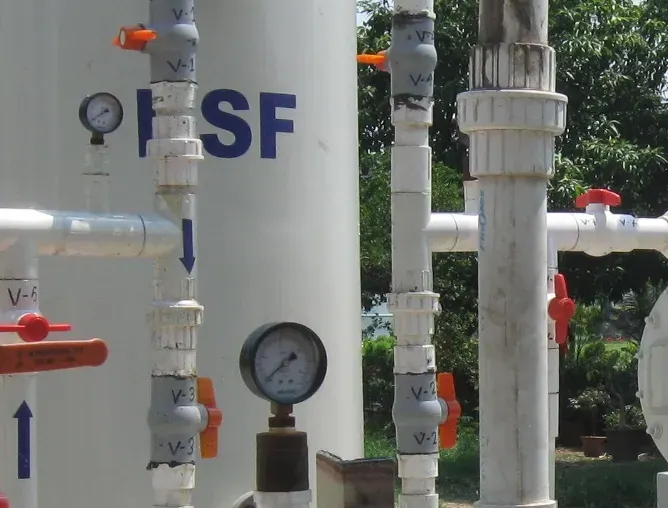
Which reading would settle it, and has anyone taken it?
A gauge that is read is evidence. One that is assumed is not.
- SufficiencyQ4
Is there enough to be sure, or only to suspect?
If not, the honest next step is more data, not a solution.
Four words the industry uses interchangeably.
We do not. Keeping them apart is what makes a recommendation trustworthy, and what stops a symptom being treated as though it were the cause. The examples are real terminology from our own reporting.
- Example
Chemical consumption is unusually high.
- Example
Dosing sequence and mixing conditions are causing poor chemical utilisation.
- Example
Modify the dosing sequence and mixing conditions, and validate through controlled operation.
- Example
Specified process modification, equipment and operating changes.
The second cell is where most reports go wrong: a finding is written up as if it were the diagnosis.
Once the cause is known
Where a diagnosis can land.
Where more than one route is technically viable, you receive clearly differentiated options rather than a single ambiguous recommendation, each with its technical benefit, cost implications, limits and assumptions stated.
Option A is the outcome we look for first. A diagnosis that ends in “operate it differently” is a good diagnosis.
Depth follows the problem.
Every engagement starts with the ₹99 consultation. The levels below are not part of it. Each one is quoted to you first, starts only with your approval, and is taken only if the problem needs it. Nobody is required to pass through all of them.
The way in
₹99 consultation
A specialist calls you and tells you the right next step and its cost.
Only if the call is not enough
Level 01: Technical site visit / preliminary assessment
Understand the reported problem and inspect actual site conditions.
OutputPreliminary assessment note
Only if the problem needs it
Level 02: Problem diagnosis
Determine the technical cause, or the likely root cause.
OutputDiagnostic findings and root-cause assessment
Only if the problem needs it
Level 03: Detailed audit or study
Assess the plant, or a defined technical domain, comprehensively.
OutputAudit or study report
Only if the problem needs it
Level 04: Solution engineering
Develop a technically appropriate intervention.
OutputSolution report, options and specifications as scoped
Only if the problem needs it
Level 05: Implementation support
Turn the selected solution into a functioning system.
OutputSupervision, modification or commissioning as scoped
Only if the problem needs it
Level 06: Verification and optimisation
Confirm and improve actual performance.
OutputPerformance assessment and optimisation plan
Only if the problem needs it
Level 07: Project technical advisory
Act as client-side technical authority on larger projects.
OutputDesign review, vendor evaluation and technical supervision
What we commit to, and what we do not.
A professional scope is more useful than a blanket disclaimer, so the boundaries are set out rather than buried.
- Assumptions are written down
- Every diagnostic conclusion identifies the evidence it rests on, the assumptions made, and the conditions under which it holds.
- Insufficient evidence is a result
- Where the evidence does not support a reliable diagnosis, the report says so and names the further data or testing needed. It does not guess in order to look decisive.
- Scope defines responsibility
- Responsibility is tied to the service actually purchased, not disclaimed by a blanket statement. Where a third party implements, our scope is the advisory, design or supervision agreed.
- Variables are named
- Influent characteristics, flow, operator practice, maintenance, utilities and equipment condition all move performance. Where they matter to a conclusion, they are stated.
Talk to an Expert
Bring us the symptom.
It starts with your account of the plant. What follows is your decision, taken with a clear next step and its cost in hand.
Talk to an ExpertA specialist calls you and tells you the right next step and its cost.